On this page
What a sinking fund is
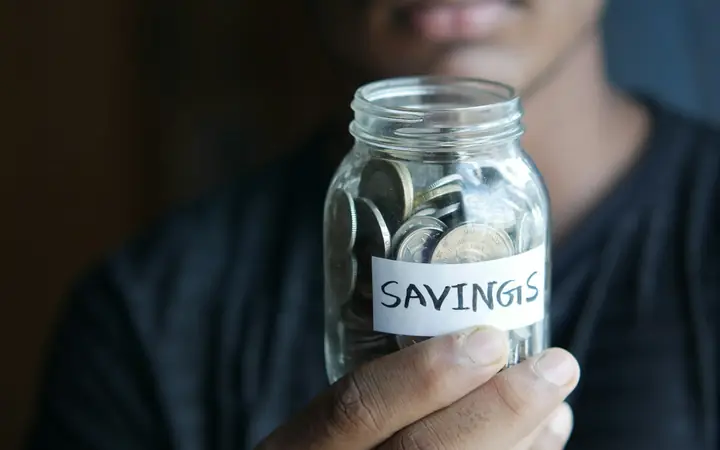
A sinking fund is money you set aside, a little each month, for a cost you know is coming. Instead of facing a $1,700 insurance bill in one month, you save about $141 a month all year. When the bill arrives, the cash is already there.
It sounds simple, and it is. The value is that big, irregular bills stop landing on a credit card. That matters: in the Federal Reserve’s 2025 survey, only 63% of adults said they would cover even a $400 surprise expense with cash or its equivalent.
Sinking funds vs an emergency fund
They are both savings, but they do different jobs.
| Sinking fund | Emergency fund | |
|---|---|---|
| For | Known, planned costs | Unknown shocks |
| Examples | Insurance premium, holidays, car tires | Job loss, medical bill, urgent repair |
| Amount | Cost of the item | Three to six months of expenses |
| Spent | On schedule | Only when something goes wrong |
Keep them separate. If you use your emergency fund for holiday gifts, it will not be there when you really need it. Our emergency fund calculator can help you size the safety net first.
Common big expenses and what to save each month
These are typical yearly costs from national surveys. Your numbers will differ, so check your own bills from last year and use the larger of the two.
| Expense | Typical yearly cost | Save per month |
|---|---|---|
| Car insurance (full coverage) | $1,694 | $141 |
| Car maintenance, repairs and tires | $1,656 | $138 |
| Home maintenance | $2,041 | $170 |
| Emergency home repairs | $1,143 | $95 |
| Holiday spending (per household) | $1,654 | $138 |
| Engagement ring (one-time) | $4,600 | $383 over 12 months |
Sources: AAA Your Driving Costs 2025 (insurance; maintenance at 11.04 cents per mile times 15,000 miles, our calculation); Angi 2025 State of Home Spending Report (home costs); Deloitte 2026 holiday survey via Reuters, Oct 2026; The Knot Real Weddings Study 2025 via IDEX Online. Monthly amounts are our calculation: yearly cost divided by 12.
Add up only the rows that apply to you. A household with one car, a home and holiday spending would need about $682 a month across five funds (our calculation: $141 + $138 + $170 + $95 + $138). That is a lot, which is why many people start with one or two and build up.
For a fuller look at vehicle costs, see the true cost of owning a car. If a ring is on your list, our engagement ring cost guide breaks down lab-grown and natural prices.
How to set up sinking funds in 4 steps
- List your irregular bills. Go through the last 12 months of bank and card statements. Note anything that does not happen every month: insurance, registration, gifts, vet visits, school costs, subscriptions billed yearly.
- Set a target and a date for each. Write down the amount and when it is due. For a cost with no fixed date, like car repairs, use a yearly estimate.
- Divide by the months left. Target divided by months until the due date equals your monthly amount. A $1,200 bill due in 8 months needs $150 a month (our calculation).
- Automate it. Schedule a transfer on payday into a separate savings account or a named bucket, so the money moves before you can spend it.
Starting late? If a bill is close, the monthly amount jumps. Saving the $1,654 average holiday budget over 12 months takes about $138 a month, but starting with only two months to go takes $827 a month (our calculation). In that case, save what you can, trim the budget, and start next year’s fund in January.
Keep each fund visible. A simple tracker on paper or a spreadsheet works. Our free printable planners give you a ready-made page for each fund.
Where to keep the money
Sinking fund money needs to be safe and easy to reach, because you will spend it within months. A high-yield savings account is the usual choice. For a large, far-off goal with a fixed date, a CD can earn a bit more if you will not need the money early. Our guide to CD vs high-yield savings compares current rates.
Many online banks let you open several savings buckets under one account, which makes it easy to label each fund (“Car”, “Holidays”, “Insurance”) without opening new accounts.
Tips that make sinking funds stick
- Start small. Even $25 a month into one fund beats a perfect plan you never start.
- Use windfalls. Put part of a tax refund or bonus into your largest fund.
- Review once a year. Insurance premiums and prices change. Update each target when you renew.
- Do not raid one fund for another. If the car fund runs short, adjust next year’s amount instead of borrowing from the holiday fund.
- Pay cash when the bill comes. The whole point is to avoid carrying the cost on a card.
This article is general information, not financial advice.
See how we research every number on our method page, or browse more saving and investing guides.
Common questions
What is the difference between a sinking fund and an emergency fund?
A sinking fund is for a cost you can predict, like a car insurance bill or holiday gifts. An emergency fund is for things you cannot predict, like a job loss. Keep them separate so planned spending does not drain your safety net.
How much should I put in a sinking fund?
Divide the expected cost by the number of months until you need it. For example, Angi found households spent $2,041 on home maintenance in 2025, which is about $170 a month (our calculation).
Where should I keep my sinking funds?
Most people use a high-yield savings account, because the money stays available and earns interest. Many online banks let you create separate named savings buckets inside one account.
How many sinking funds should I have?
Start with two or three for your largest predictable bills, such as car costs and holidays. Add more as your budget allows. Too many small pots can be hard to track.
Sources
Every number above comes from these pages. We list the date each page showed when we checked it.
- AAA, Your Driving Costs 2025 Fact Sheet
- Angi 2025 State of Home Spending Report (via Stock Titan)
- GV Wire (Reuters), US Holiday Sales Growth to Speed Up, NRF Forecasts (Deloitte survey)
- IDEX Online, The Knot Real Weddings Study engagement ring findings
- Federal Reserve, Economic Well-Being of U.S. Households in 2025 (press release)
Estimates are for general information only. Get written quotes from licensed local pros before you decide.

- Passed Level II of the CFA® Program
- Canadian Securities Course (CSC)
- Conduct and Practices Handbook (CPH)
Sepehr Parsa is a financial planner and the founder and editor of DollarMap. He has passed Level II of the CFA Program and completed the Canadian Securities Course (CSC) and the Conduct and Practices Handbook (CPH) course. He writes and edits our guides on cars, home repairs, budgeting, saving and investing, and checks that every number has a source.
“In a slowing economy, a budget is what keeps you afloat.”
How we check every number