On this page
Brake replacement cost by job
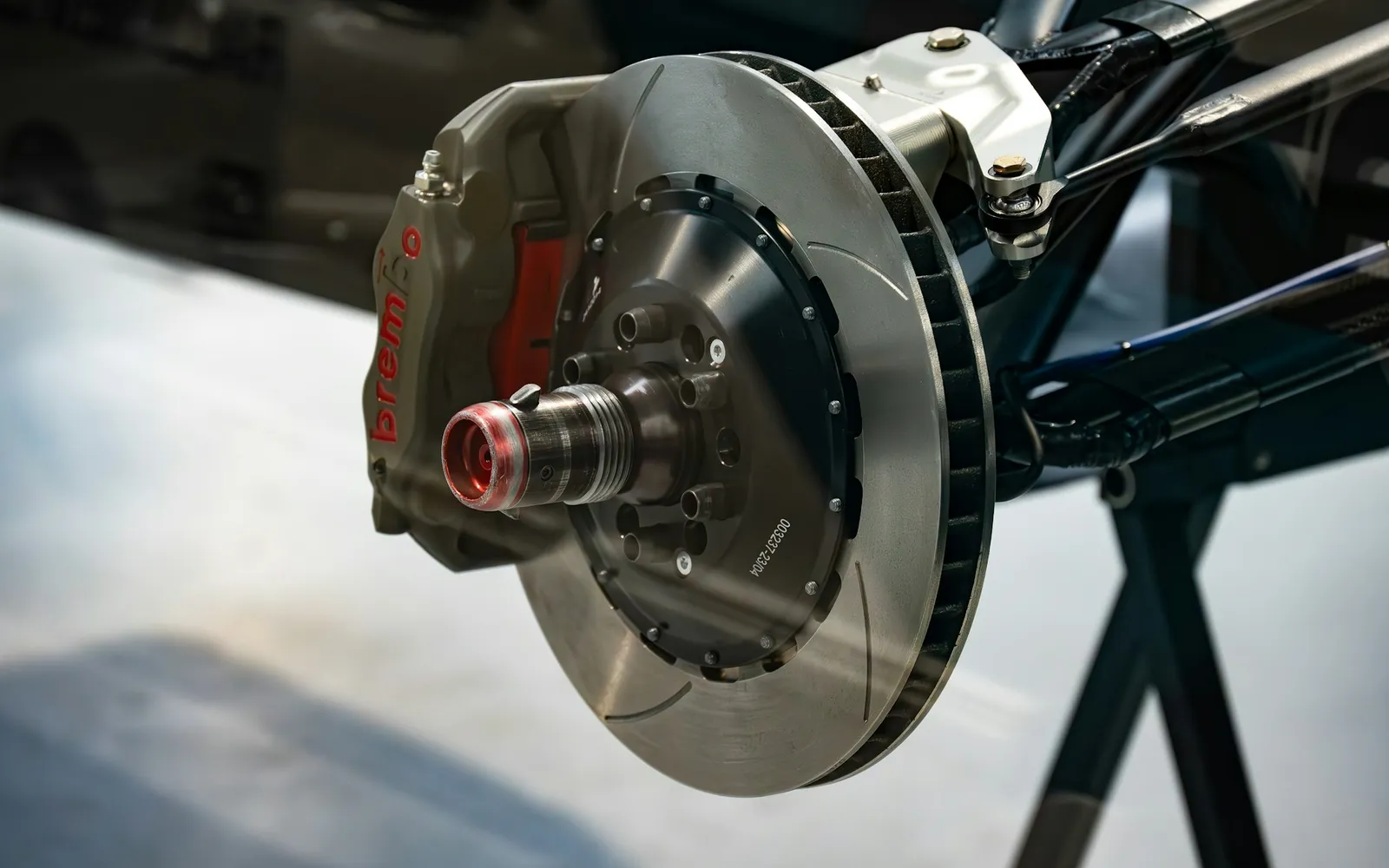
“Brake replacement” can mean anything from new pads to a full set of pads, rotors and calipers. Here is what each job costs on average, according to RepairPal’s September 2026 estimates.
| Brake job | Parts | Labor | Total |
|---|---|---|---|
| Brake pads | $213-$215 | $122-$179 | $335-$394 |
| Brake rotors | $406-$452 | $168-$247 | $574-$698 |
| Brake caliper | About $749 | $150-$219 | $898-$968 |
Source: RepairPal, estimates updated Sep 2026. Excludes taxes and fees.
Most of the time you will only need pads. Rotors and calipers last longer, so they are replaced less often.
Notice where the money goes. On a pad job, parts and labor are close to even. On a caliper job, the part itself is about $749, so parts make up roughly 80% of the bill (our calculation). So on bigger brake jobs, the parts a shop chooses can move your quote more than its labor rate.
Brake costs over the life of a car
ConsumerAffairs says pads and rotors should be replaced roughly every 50,000 miles. If you keep a car to 150,000 miles, that could mean about three full brake jobs on all four wheels, or roughly $5,400 to $6,500 at today’s prices (our calculation). Smooth driving and catching worn pads early can stretch that out.
Pads and rotors per axle and for the whole car
Brakes are usually serviced one axle (the front pair or the rear pair) at a time. ConsumerAffairs, using RepairPal data, breaks the cost down like this.
| Service | One axle | All four wheels (our calculation) |
|---|---|---|
| Pads only | $330-$390 | $660-$780 |
| Rotors only | $571-$694 | $1,142-$1,388 |
| Pads and rotors | $901-$1,084 | $1,802-$2,168 |
Source: ConsumerAffairs, using RepairPal data, Aug 2026. Pads only and rotors only for four wheels are our calculation (one axle times two).
Older guides quote lower prices. Carfax put pads at about $150 to $300 per axle in 2024, and Les Schwab says brake part repair and replacement can range from $200 to $500 per axle. Those figures show how much prices vary by shop, region and car.
What drives the price
Your vehicle. This is the biggest factor. ConsumerAffairs lists pads and rotors for one axle at:
| Vehicle | Pads | Rotors | Pads and rotors |
|---|---|---|---|
| Honda Civic (Sport) | $216-$273 | $429-$549 | $645-$822 |
| Kia Sorento | $360-$493 | $507-$645 | $867-$1,138 |
| BMW M3 | $872-$1,526 | $9,818-$15,405 | $10,690-$16,931 |
Source: ConsumerAffairs, using RepairPal data, Aug 2026.
At the top of each range, the BMW job costs about 20 times as much as the Civic’s (our calculation).
Pad type. Carfax and Les Schwab both note that ceramic pads are quieter, make less dust and tend to last longer, but cost more. Organic pads are common and cheaper. Semi-metallic pads suit heavier braking but can be noisier and wear rotors faster.
Shop type. Independent mechanics usually charge less than dealerships, per ConsumerAffairs. Carfax estimates pad jobs split roughly 50/50 between parts and labor, so labor rates matter.
Trucks, hybrids and EVs. Heavy-duty trucks cost more to service, and ConsumerAffairs notes that hybrids and EVs may need dealer-specific equipment.
How long brakes last and warning signs
Carfax says brake pads last 30,000 to 80,000 miles and rotors 30,000 to 70,000 miles. Les Schwab gives 30,000 to 70,000 miles for pads on a typical passenger car. City driving with lots of stopping wears them faster.
Signs your brakes need attention, from Carfax and Les Schwab:
- Squealing when you brake, often a built-in wear indicator
- Grinding, which can mean the pad material is gone and metal is touching the rotor
- A pulsing or shaking pedal or steering wheel
- The car pulling to one side when braking
- A soft or sluggish pedal, or a brake warning light
- A burning smell, which may point to a stuck caliper or overheated brakes
How often to check? Les Schwab recommends a brake check every 5,000 miles or six months, ConsumerAffairs says at least once a year, and Carfax suggests a full inspection every 20,000 to 30,000 miles or every other year. A quick check during a tire rotation or oil change is an easy way to stay ahead of it.
Grinding is the one not to ignore. Driving on worn-out pads can ruin the rotors, turning a pad job into a much bigger bill. Brake fluid also needs changing: ConsumerAffairs says most automakers recommend it every two to three years or 30,000 to 45,000 miles.
How to pay less for a brake job
- Replace pads before they are gone. Catching wear early can save the rotors.
- Ask if rotors can be resurfaced. If they are still in good shape, resurfacing can be cheaper than new rotors, though many modern rotors cannot be resurfaced.
- Get a quote from an independent shop as well as the dealer, and ask about quality aftermarket parts.
- Ask for an itemized quote that lists pads, rotors, calipers, fluid and labor separately, so you can see what is really needed.
- Drive smoothly. Avoid hard stops, downshift on long hills instead of riding the brakes, and remove heavy cargo you do not need.
- Only do it yourself if you have the skills. ConsumerAffairs advises against DIY on cars with electronic parking brakes, complex ABS or brake-by-wire systems.
Brakes are a regular part of the true cost of owning a car. If a shop recommends more work while your car is in, it helps to know the typical new tires cost and car battery replacement cost before you approve extra work.
See how we research every number on our method page, or browse more car costs.
Common questions
How much does it cost to replace brake pads and rotors?
ConsumerAffairs, using RepairPal data, puts pads and rotors at about $901 to $1,084 per axle, and $1,802 to $2,168 for all four wheels. Pads alone run about $330 to $394 per axle.
How often do brakes need to be replaced?
It depends heavily on how and where you drive. Carfax says pads last 30,000 to 80,000 miles and rotors 30,000 to 70,000 miles, and stop-and-go city driving wears them out faster than highway miles.
Do I need new rotors every time I replace my pads?
Not always. Carfax notes rotors often do not need replacing with every pad change, and rotors that are still thick enough can sometimes be resurfaced instead. Many modern rotors cannot be resurfaced, though, per ConsumerAffairs.
Are brakes covered by my car warranty?
Usually not. ConsumerAffairs says pads and rotors are normally excluded from factory and extended warranties because they are wear items, though some plans do cover brake jobs.
Sources
Every number above comes from these pages. We list the date each page showed when we checked it.
- RepairPal, Brake Pad Replacement Cost Estimate
- RepairPal, Brake Rotor Replacement Cost Estimate
- RepairPal, Brake Caliper Replacement Cost Estimate
- ConsumerAffairs, Cost to Replace Brake Pads and Rotors
- Carfax, How Much Does Brake Pad Replacement Cost?
- Les Schwab, Complete Guide to Brake Pads
Estimates are for general information only. Get written quotes from licensed local pros before you decide.

- Passed Level II of the CFA® Program
- Canadian Securities Course (CSC)
- Conduct and Practices Handbook (CPH)
Sepehr Parsa is a financial planner and the founder and editor of DollarMap. He has passed Level II of the CFA Program and completed the Canadian Securities Course (CSC) and the Conduct and Practices Handbook (CPH) course. He writes and edits our guides on cars, home repairs, budgeting, saving and investing, and checks that every number has a source.
“In a slowing economy, a budget is what keeps you afloat.”
How we check every number